
Supercharged IoT connectivity, designed with security and resilience at its core.
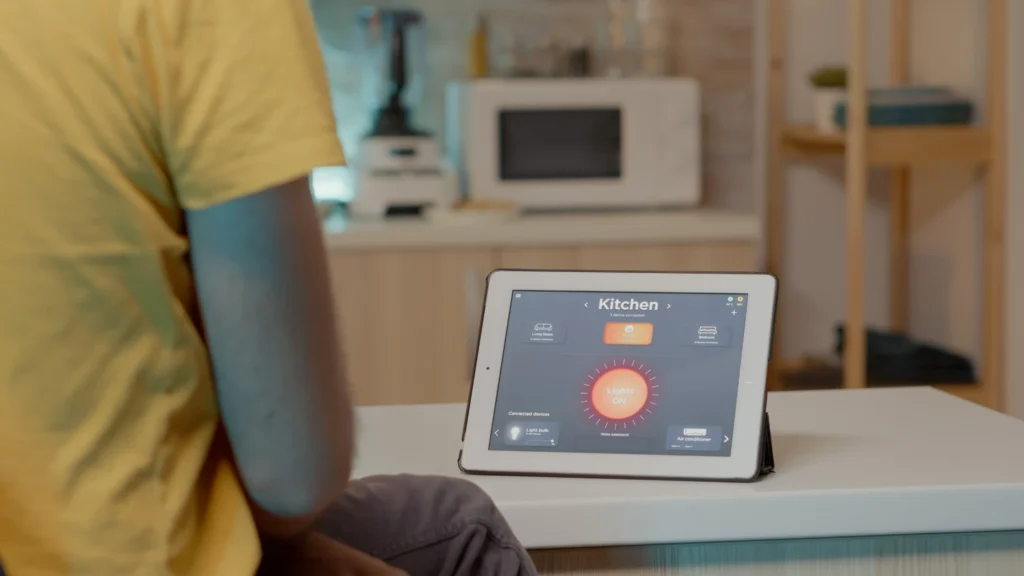
The global Smart Home Cloud Platform market is rapidly evolving as connected devices and intelligent automation redefine the way people live. Forecasts predict the industry will surge to nearly $75 billion by 2030, marking one of the most transformative eras for connected living. This growth is being fuelled by innovations in Internet of Things (IoT), cloud computing, and the increasing demand for energy-efficient, intelligent homes.
Cloud platforms are the backbone of today’s smart home ecosystem. They enable seamless communication between devices such as thermostats, lighting systems, and security sensors. With personalisation becoming a key consumer demand, cloud solutions make it possible to integrate hundreds of devices under a unified, accessible system.
Unlike traditional local servers, cloud platforms provide scalability and flexibility, allowing users to manage their smart homes remotely through mobile applications or voice assistants. This model has become the foundation for large-scale IoT adoption in residential and commercial properties.
Several major factors are accelerating the global adoption of smart home cloud platforms:
Increased IoT Penetration: The number of connected devices in homes continues to rise, with IoT technologies offering real-time data collection and analytics.
Enhanced Security and Privacy Measures: Modern cloud platforms integrate advanced encryption, two-factor authentication, and continuous monitoring to protect household data.
Energy Efficiency Goals: Intelligent automation helps optimise power consumption, aligning with sustainability initiatives across the UK and Europe.
Consumer Preference for Personalised Living: Voice-controlled systems and adaptive home environments enhance user comfort and experience.
Cloud-based solutions have made it possible for smart devices to communicate directly through machine-to-machine (M2M) connections, improving automation accuracy and efficiency. Businesses utilising M2M SIMs are ensuring continuous data exchange between smart home sensors, utilities, and cloud networks.
The success of the smart home market depends on interoperability between hardware and software providers. Cloud services bridge communication gaps by providing APIs that connect lighting, security, entertainment, and home management systems.
In large-scale environments, such as IoT in hospitality, similar cloud integrations are enabling hotels and property managers to optimise comfort, monitor occupancy, and streamline maintenance operations — all from centralised dashboards. The same logic applies to residential smart home platforms, where real-time updates enhance both convenience and safety.
The synergy between IoT and cloud-based infrastructure extends further into urban innovation. Cities leveraging connected devices for public utilities and infrastructure management are utilising technologies similar to those seen in IoT smart city initiatives. These systems form a bridge between home-level automation and city-scale connectivity, contributing to a unified digital ecosystem.
By 2030, the smart home cloud platform market will not only be defined by connectivity but by intelligence. The combination of artificial intelligence (AI) and machine learning will enhance predictive maintenance, behavioural adaptation, and personalised automation.
Home systems will learn user routines adjusting temperature, lighting, and security based on patterns. Additionally, advances in cloud-edge computing will allow faster decision-making and reduced latency for mission-critical home applications.
Environmental sustainability will also play a central role. Cloud-connected systems will enable homeowners to monitor and reduce carbon footprints, track energy usage, and participate in local renewable energy networks.
Despite rapid advancements, the market still faces challenges such as data privacy concerns, fragmented device ecosystems, and high initial costs. Manufacturers and platform providers must collaborate to develop standardised communication protocols and secure network frameworks that enhance user trust.
Telecommunication providers, for instance, play a critical role by offering stable connectivity through multi-network SIMs and fixed IP configurations. Integrating solutions such as fixed IP SIM card ensures uninterrupted cloud communication a crucial feature for home monitoring and security systems.
The journey toward smart living is accelerating, with cloud platforms emerging as the heart of innovation. By connecting billions of devices worldwide, the Smart Home Cloud Platform market is shaping how people interact with technology every day.
From energy optimisation to predictive automation, the possibilities are expanding across residential and commercial sectors. With the continued integration of IoT, M2M communication, and cloud technology, homes are becoming more secure, intelligent, and sustainable.
To explore the latest in IoT connectivity and network solutions supporting the smart home revolution, visit Smooth Connectivity.

Supercharged IoT connectivity, designed with security and resilience at its core.